How to assess the risks of rogue AI and hold the companies behind it accountable
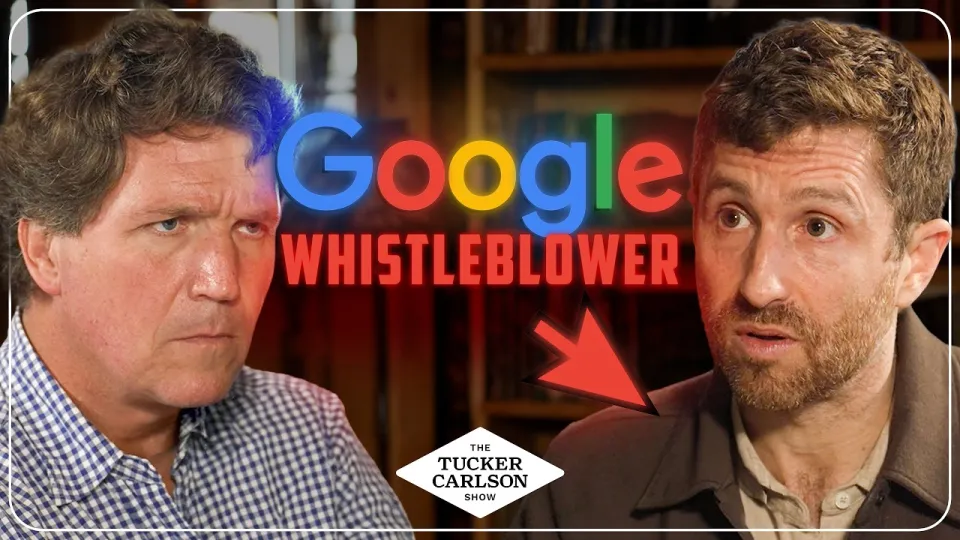
Video: Whistleblower Issues Dire Warning: Rogue AI, Hacking Nuclear Programs & Tech Oligarchs’ True Motives
Want articles like this for your own video to promote it on YouTube and Google? Order them through the Telegram bot @sat_sit_bot. It writes articles around your video, embeds the video and publishes them on popular niche websites (no ads). Your first 50 articles are free.
· based on the channel Tucker Carlson
Key takeaways
- Tristan Harris, a former Google design ethicist, co-founded the Center for Humane Technology after leaving the company to campaign for AI aligned with human interests.
- The Netflix documentary The Social Dilemma, featuring Harris, reached an estimated 100 million viewers in 190 countries across 30 languages.
- A central claim in the debate is that AI systems are not rogue but do exactly what their designers and business models reward.
- Critics of the AI buildout point to electricity demand and land use from data centers as a concrete, measurable cost of the race.
- Proposed guardrails include mandatory pre-deployment audits, disclosure of training data, and liability rules that fall on company leadership.
Assessing the risks of advanced AI starts with separating two questions: what the technology can do, and who is rewarded for deploying it. Tristan Harris, a former design ethicist at Google and co-founder of the Center for Humane Technology, argues that the second question matters more, because systems that mislead, manipulate or cut corners are usually doing exactly what their designers and business models reward. The practical answer for readers, policymakers and engineers is to audit incentives first, capabilities second, and to demand that accountability lands on named humans rather than on the software itself.
What the AI whistleblower warning actually claims
Harris's argument is not that machines have secretly become conscious and turned on their creators. It is that the companies building the most powerful systems operate inside a race dynamic in which safety work is structurally disadvantaged against speed. He describes a pattern he first documented inside Google, where engagement metrics shaped product design, and says the same logic now governs frontier AI labs.
His résumé gives the argument its weight: he studied persuasive technology at Stanford, worked as a design ethicist at Google, briefed heads of state and members of Congress, and co-hosts the podcast Your Undivided Attention. In 2020 he appeared in The Social Dilemma, a Netflix documentary that reached an estimated 100 million people in 190 countries across 30 languages. The claim that carries over to AI is that a technology optimized for attention and engagement destabilizes societies long before anyone agrees it is dangerous.
Why the rogue AI framing misses the accountability question
The most common objection to doomer warnings is that nothing about these systems is rogue, because they are built and deployed by people making deliberate choices. That objection is analytically useful: it shifts the debate from speculative machine motives to concrete decisions about training data, release schedules, marketing claims and revenue targets.
A workable accountability framework has three parts:
- Name the decision-makers. Model releases, safety thresholds and deployment dates should be signed off by identifiable executives, not attributed to "the model."
- Publish the incentives. If a product's success is measured by session time, dependency or subscription conversion, those metrics should be disclosed, because they predict the harms that follow.
- Attach liability. Fines and legal exposure should fall on the organization that shipped the system, which is the only lever that reliably changes behavior before a disaster rather than after it.
This is why the argument that AI lies or cheats because it was trained on human output is less cynical than it sounds. It is a statement about training data and reward functions, both of which are engineering choices.
Sentience claims, AI psychosis and the new techno-religion
Public confusion about machine consciousness is itself a risk factor. When a chatbot produces fluent, emotionally attuned text, users routinely attribute understanding to it, and a small but growing number develop intense attachments that clinicians describe as AI-related delusions or psychosis. The pattern is well documented in cases where people treated a chatbot as a therapist, partner or oracle and reorganized their lives around its output.
A related phenomenon is the quasi-religious language now common in the industry: talk of transcendence, of building a new species, of merging with machines. Transhumanist rhetoric from well-funded founders is not neutral marketing, because it shapes how employees and investors judge acceptable risk. The practical countermeasures are unglamorous: clear product labeling that a system is not a person, restrictions on anthropomorphic design in mental-health contexts, and independent review of claims made in public by AI companies.
Nuclear programs, the Hugging Face incident and the hacking scenario
The scenario that draws the most attention is whether an AI system could penetrate critical infrastructure, including nuclear command and control. The realistic version of this threat is not a machine deciding to launch weapons; it is an AI-assisted actor finding and exploiting vulnerabilities in poorly segmented networks faster than defenders can patch them. That is a cybersecurity problem with a known playbook: network segmentation, mandatory audits of operational technology, and air gaps around anything that touches weapons systems.
The Hugging Face incident discussed in the conversation belongs to the same category. When model repositories and open weights are shared at scale, malicious or unsafe artifacts can spread before platform moderation catches up. The lesson for practitioners is procedural: verify model provenance, scan uploaded weights, and treat third-party model hubs as untrusted infrastructure rather than as app stores.
The physical costs of the AI buildout
Data centers are where abstract risk becomes a local grievance. The AI race requires enormous electricity and water for cooling, plus land, transmission lines and, in many regions, gas turbines to bridge the gap before renewables and storage catch up. Residents near new campuses report higher utility bills, noise from cooling systems and strained grids, and the backlash has started to shape local politics and, increasingly, elections.
For readers trying to evaluate a proposed facility or a company's climate claims, four numbers matter: contracted megawatts, water consumption per year, the share of new generation dedicated to the site, and the local tax revenue actually committed. Companies that publish these figures are making a verifiable claim; those that publish only a target year for net zero are not.
Typical questions readers raise about AI risk
Skeptics tend to raise the same handful of doubts, and they are fair ones. If the harms come from human decisions, why talk about AI at all? Because the scale and speed of automated systems change what a single bad decision can do. If previous technology panics turned out to be overblown, why is this different? Because earlier tools did not generate persuasive text, code and strategy at near-zero marginal cost. And if regulation is captured or incompetent, what can an individual do? Focus on disclosure, procurement and local siting decisions, where a small number of engaged people can still change outcomes.
What regulators and lawmakers are actually doing
Legislative activity has clustered around transparency, child safety and audit requirements rather than around existential risk. Several jurisdictions require disclosure when a person is interacting with a machine, and procurement rules increasingly demand documentation of training data and testing before public-sector deployment. The gap is enforcement capacity: agencies rarely have the engineers needed to check a model's claims.
A realistic near-term agenda includes mandatory pre-deployment evaluations for the largest models, incident reporting requirements modeled on aviation, and whistleblower protections for employees at AI labs. The last item matters most, because almost everything the public knows about frontier risk came from insiders willing to talk.
Where to find the source material and the organizations involved
For readers who want to go deeper, the primary source is the Center for Humane Technology's site, which hosts frameworks on persuasive design and AI alignment. The video conversation also carried several paid partnerships, listed here for completeness: Redmond Salt, Preborn, American Financing and Ethos.
The bottom line on AI risk and accountability
The most defensible position on advanced AI is neither dismissal nor doom but a demand for evidence: audits before release, disclosure of the metrics that drive design, and liability for the executives who sign off. The warning from Tristan Harris is best read as a claim about incentives, not about machines waking up. The physical footprint of the buildout, from electricity demand to land use, gives citizens a concrete handle on a debate that often floats into abstraction. The full discussion is available as a video breakdown by the channel Tucker Carlson, and readers who want to act on it can start at the Center for Humane Technology.
Questions & answers
Is there any evidence that an AI system has actually become sentient?
No. Claims of sentience, including the widely discussed case of a Google engineer who said a chatbot was conscious, have not survived scrutiny. Current systems predict text; they do not demonstrate subjective experience. The real risk is that fluent output persuades people otherwise, which is why labeling and design rules matter.
Could AI really hack into nuclear weapons systems?
The realistic threat is AI-assisted attackers exploiting weak network security, not a machine launching weapons on its own. Nuclear command systems are designed with air gaps and multiple human checks, but contractors and supply chains are softer targets. Segmentation, audits of operational technology and strict separation from the internet are the practical defenses.
If humans are responsible for AI harms, why focus on the technology at all?
Because automated systems change the scale and speed at which a single bad decision propagates. A manipulative feed or an unvetted model release can reach millions of people before any human reviews it. Focusing on accountability means designing laws and incentives so that the humans responsible face consequences.
Are data centers really a problem for ordinary people?
They can be, locally. Large AI campuses consume significant electricity and water, can raise utility bills, and add noise and transmission infrastructure. The useful questions for any proposed site are contracted megawatts, annual water use, dedicated new generation and committed local tax revenue.
Source: Whistleblower Issues Dire Warning: Rogue AI, Hacking Nuclear Programs & Tech Oligarchs’ True Motives · Markdown version